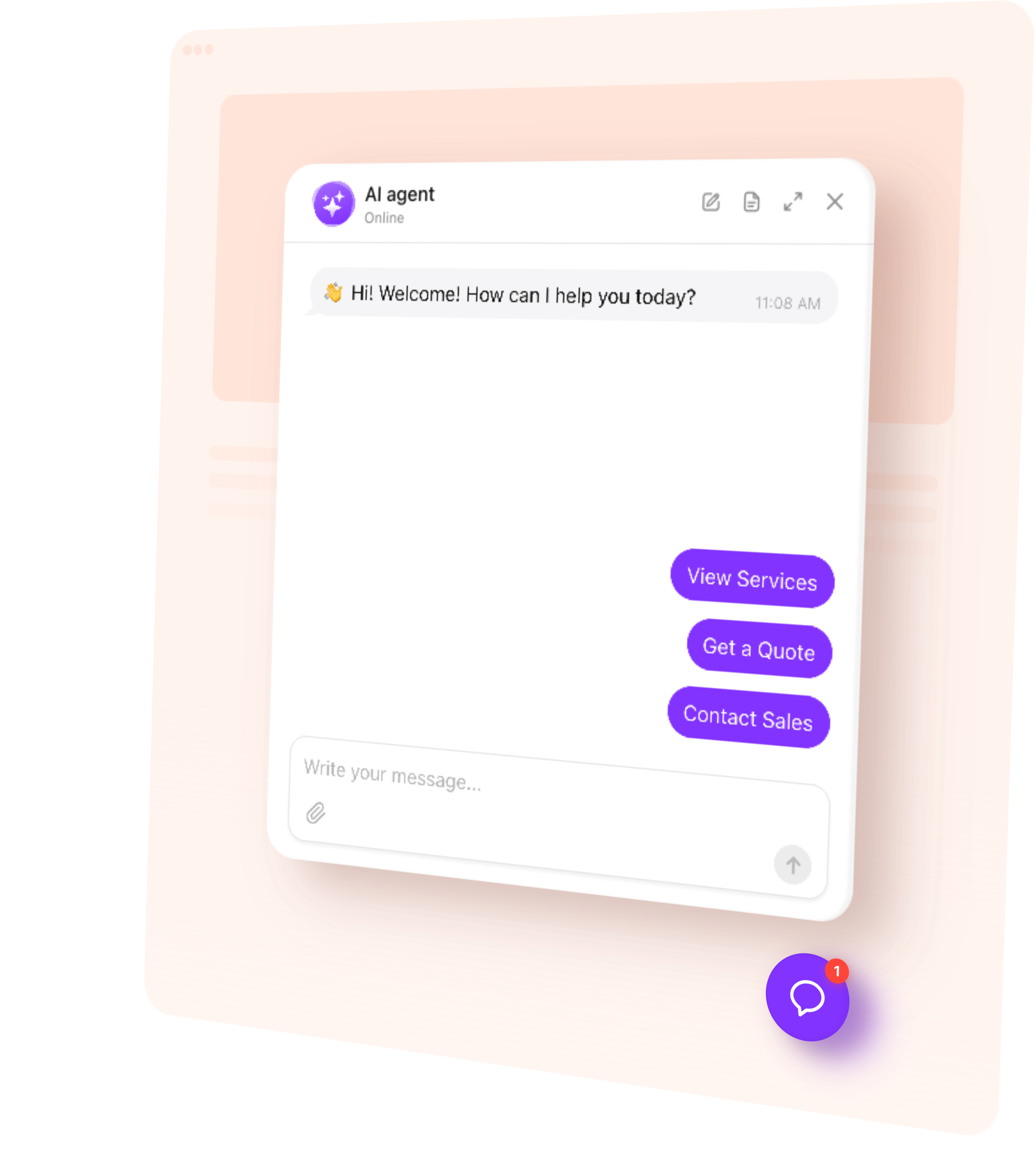
The agent that answers on your website answers on WhatsApp too. Same knowledge, same rules, same tone — you are not setting up a second bot.
And there is no shared inbox behind it. Messages are answered, not queued for you to work through later.
Why WhatsApp
For a lot of small businesses WhatsApp is where customers actually write, especially outside English-speaking markets and in trades where people expect a fast reply.
It is also where waiting is least tolerated. A message left overnight on a website form is normal. The same delay on WhatsApp reads as being ignored.
Connect your WhatsApp account
Connect the account once. Nothing to build afterwards — the agent already knows your business from your website.How it learns your business
Someone messages your WhatsApp number with a question they would have asked on the site — a price, an opening time, whether you have a slot this week.
The agent replies in WhatsApp from that same content. If they are ready to leave a number or follow a booking link, it can do that in the chat instead of sending them back to a browser.
It knows the same things it knows on your site
Your price list, your opening hours, your policies — one knowledge base behind every channel.
Change something on your website and the agent knows it on WhatsApp the same day. There is no second copy to keep in step.
Connect the WhatsApp number you want answered. WhatsApp sets its own conditions for which numbers may be connected to an app and how replies are sent, so the connect step is where you confirm yours qualifies.
After the connection, inbound messages go to the same agent that already trained on your website. There is no second knowledge base to fill.
When it hands over to you
When the agent cannot help, it says so and gives the person your details — and on WhatsApp they are already in the right app to use them.
This matters more here than on a website. An unanswered message sits in someone chat list looking like it was ignored, so the agent is explicit about what happens next rather than going quiet.
Try it on your own website
Paste your website address and watch it build itself. It reads your pages, works out what your business does and drafts how it should speak — then you can ask it something about your own business and see what it says.
1. Enter your website
2. Create AI agent
3. Add to website
Connect WhatsApp
Takes about a minute — create your bot, then connect the channel when you are ready.